The design
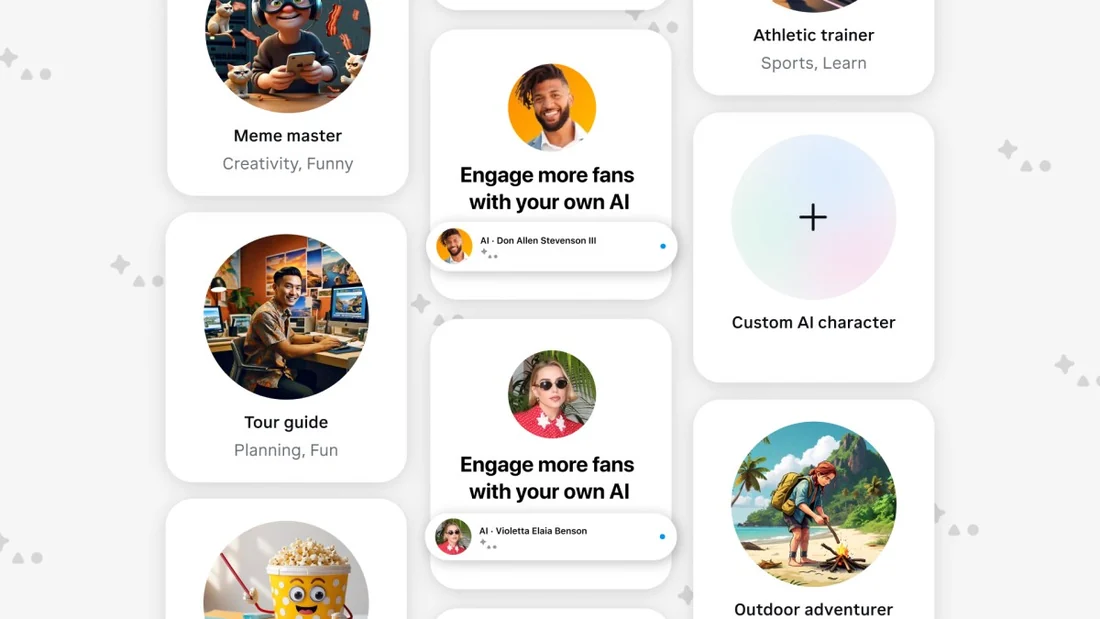
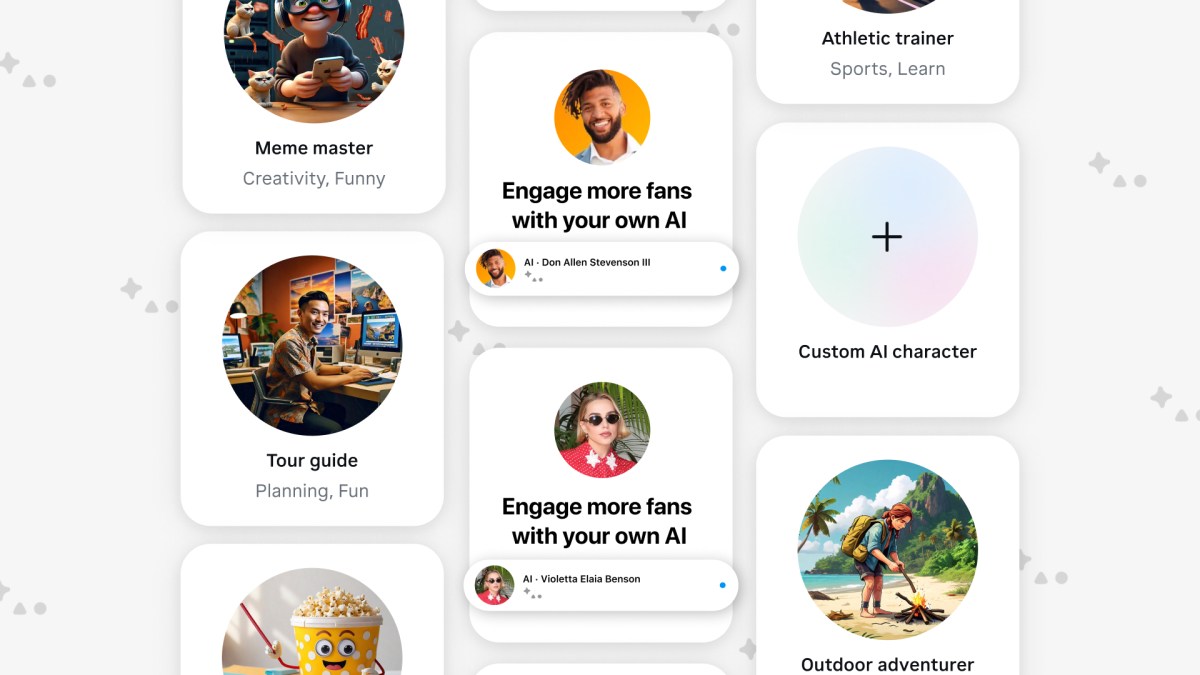
On 29 July 2024, Meta published an announcement for AI Studio, built on Llama 3.1, describing it as "a place for people to create, share and discover AIs to chat with — no tech skills required." The same-day AI Studio product page divides the tool into two types: Creator AI, an extension of a real creator's Instagram or Threads presence handling messages and story replies, and AI character, a persona anyone can build around an interest rather than a real person. Builders choose a personality, tone, avatar and tagline, and can publish to Instagram, Messenger, WhatsApp, or the web. The product extends, and in the company's own later marketing largely replaces, the celebrity characters Meta introduced in September 2023.
What the evidence says
Meta's materials describe the customization mechanism concretely: creators "choose the content your AI is trained on, including your Instagram and Threads content, facts about you, and topics to avoid," and the page promises "full visibility into what your AI says, who engages with it." That is Meta's account of its own guardrails, not an independently audited claim; no outside research examining AI Studio's moderation performance was located. The post separately states "policies and protections" exist "to keep people safe," pointing to a review process and published AI Studio Policies without detailing what those policies prohibit.
What it asks of people
Building a Creator AI asks a creator to hand over a meaningful data footprint, existing posts, personal facts, and topic boundaries, so the character can plausibly stand in for them. For people who chat with a published character, the arrangement asks less explicitly: Meta's page describes responses as "clearly labeled," so a user in principle knows they are talking to an AI extension of a person or a fictional persona, not the person themselves. What the product does not guarantee is that a character's responses match the real creator's judgment on sensitive topics simply because the creator supplied the training material.
Privacy and safeguards
Meta's page states a Creator AI can draw on "your Instagram and Threads content," meaning it uses a creator's existing public data rather than a freshly collected dataset; the announcement does not specify a retention period for that content, nor what happens to a character's chat logs if the creator disables it. The company points to AI Studio Policies and a review process as its safety mechanism, but this review could not independently verify how that process is applied, since Meta has not published enforcement data alongside the launch.
- Whose data trained a given AI character — the creator's own posts, or something broader?
- What does "clearly labeled" actually look like in the chat interface a user sees?
- What happens to a character's data and chat history if the creator account is deleted or suspended?
AI Studio generalizes what Meta tested with paid celebrities in 2023: a persona built from someone's real content and interests, now available to any creator rather than a roster the company hand-picked and licensed. That change moves relationship-design decisions, about disclosure, data use, and moderation, from one legal team to millions of individual creators.
Sources & reading trail
Meta's own announcement describing AI Studio's launch, the Creator AI / AI character distinction, and stated safety language.
Source published: 29 July 2024 · Retrieved: 16 September 2026
Meta's own product page detailing customization controls, data sources for a Creator AI, and transparency claims; the live page returns errors to automated fetches, so an archived capture is cited.
Source published: Not established · Retrieved: 16 September 2026
Product documents, regulator records and studies establish the entry; the design reading is AI Companions editorial analysis. This retrospective draft does not imply the site published on the event date.