The design
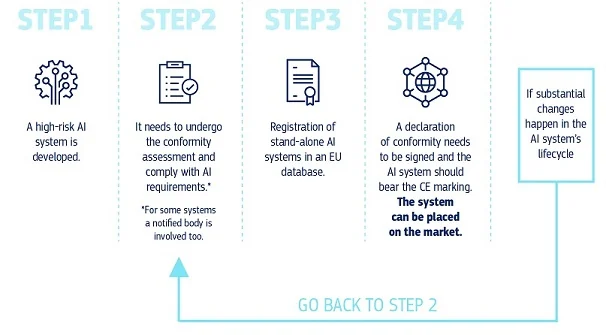
Article 50 of the EU AI Act, published in the Official Journal on 12 July 2024, requires that providers 'ensure that AI systems intended to interact directly with natural persons are designed and developed in such a way that the natural persons concerned are informed that they are interacting with an AI system,' unless that would be obvious to a reasonably well-informed, observant and circumspect person given the circumstances and context of use. As the European Commission's own timeline confirms, the duty became applicable on 2 August 2026, meaning it is now in force. A separate exemption covers systems law enforcement is authorised to use to investigate crime, subject to safeguards, unless the system is open to the public for reporting an offence.
What the evidence says
The text itself, not a summary of it, is the source for the 'obvious from the circumstances' standard, and that phrase is the operative test for companion products specifically. A task-oriented assistant that answers a factual query is obviously artificial to most users regardless of disclosure; a companion product built to sustain what feels like a relationship is designed against that inference. The regulation does not define what makes AI obvious for a companion app, leaving the standard to be applied case by case, and it does not specify a disclosure format, such as a persistent label, a one-time notice, or a spoken statement.
What it asks of people
The duty falls on providers, who must design the disclosure into the product; it does not require a user to seek out the information. But it asks a provider to make a judgment call, whether a reasonably attentive user would already find the AI's nature obvious, that a company whose product is built to feel human has a commercial incentive to answer generously in its own favor. Nothing in the article requires an independent check on that judgment before the product launches.
Privacy and safeguards
Article 50 addresses disclosure, not data handling, emotional design or safety features; it does not regulate what a companion product may say once a user knows it is artificial. Enforcement mechanics, including which authority checks compliance and what a penalty looks like for a companion app that relies too heavily on the obviousness exception, sit in other parts of the regulation this entry does not cover.
- Does a companion app's onboarding or interface state, without requiring a search, that the user is talking to an AI system?
- Would a reasonably attentive new user of this product find its artificial nature obvious without being told, or does the product's design work against that?
- Who checks a provider's own judgment that disclosure was unnecessary, and what happens if that judgment is wrong?
A disclosure duty is now the law for products built to interact like a person, but the exception written into the same sentence gives a company built on that illusion room to argue it does not need to break it.
Sources & reading trail
The regulation's own text of Article 50's transparency obligation for AI systems interacting with natural persons, including the 'obvious from the circumstances' exception and the law-enforcement carve-out.
Source published: 12 July 2024 · Retrieved: 16 September 2026
The European Commission's own timeline confirming 2 August 2026 as the date the Article 50 transparency rules became applicable.
Source published: Not established · Retrieved: 16 September 2026
Product documents, regulator records and studies establish the entry; the design reading is AI Companions editorial analysis. This retrospective draft does not imply the site published on the event date.